
7 Shocking Reasons Why Sitting Still All Day Sabotages Addiction Recovery

Why Sitting Still in Addiction Recovery Is a Hidden Risk
Sitting still in addiction recovery may appear harmless, necessary, or even therapeutic inside treatment settings. Group therapy, individual counseling, psychoeducation, and meetings all rely heavily on clients remaining seated for long periods of time. Stillness is often equated with focus, compliance, and emotional safety.
But for the addicted and trauma-impacted nervous system, prolonged stillness can have the opposite effect.
Neuroscience and trauma research show that sitting still in addiction recovery actively works against healing. Clients entering treatment are already neurologically dysregulated. Their stress systems are overactive, their reward systems are depleted, and their ability to self-regulate is compromised. When the body is forced into inactivity for hours at a time, these imbalances intensify rather than resolve.
Addiction recovery is not only a cognitive or behavioral process — it is a physiological process. Healing requires the nervous system to move out of survival mode and into regulation. When the body remains inactive, the nervous system stays locked in fight-or-flight or shutdown. Emotional regulation becomes harder. Attention narrows. Anxiety rises. Cravings intensify. Engagement drops.
What often looks like resistance, lack of motivation, or “not wanting to be here” is frequently a body that is overwhelmed and unable to regulate itself.
This creates a silent disconnect inside treatment settings: clinicians are delivering evidence-based therapy to nervous systems that are not biologically ready to receive it. Insight cannot land in a dysregulated body. Coping skills cannot be accessed when cortisol is high and dopamine is depleted.
This is why sitting still in addiction recovery has quietly become one of the most overlooked — and most costly — threats to treatment outcomes. Until the body is regulated, the mind cannot fully heal.
The Neuroscience Behind Sitting Still in Addiction Recovery
Addiction is not a moral failure or a lack of willpower. It is a nervous system disorder shaped by trauma, chronic stress, and repeated substance exposure over time. Substances hijack the brain’s stress and reward systems, training the body to rely on chemicals to regulate emotion, safety, and motivation.
When substances are removed, the nervous system does not automatically return to balance. Instead, it is left raw, hypersensitive, and dysregulated. The brain has learned to depend on external chemicals to manage stress and emotion. In early recovery, clients are suddenly expected to self-regulate without the very tools their nervous systems were using to survive.
Sitting still in addiction recovery reinforces this dysregulation.
Prolonged sitting sends a powerful signal to the nervous system: remain alert, remain guarded, remain contained. For a trauma-impacted system, this often keeps the body locked in survival mode rather than allowing it to downshift into regulation.
From a neurological standpoint, prolonged sitting contributes to:
Elevated cortisol levels, maintaining a constant stress response
Sympathetic nervous system dominance, keeping the body in fight-or-flight
Reduced parasympathetic activation, limiting rest-and-digest recovery
Poor vagal tone, impairing emotional regulation and stress resilience
Instead of calming the nervous system, extended stillness often amplifies internal chaos.
For individuals in early recovery, sitting still in addiction recovery commonly results in:
Restlessness, as the body searches for a way to discharge stress
Anxiety, driven by unchecked cortisol and hypervigilance
Emotional volatility, including irritability and sudden mood shifts
Dissociation or shutdown, especially in trauma-exposed clients
Difficulty focusing, as executive functioning remains offline
What appears outwardly as boredom, defiance, or disengagement is frequently a nervous system under siege.
This has direct clinical implications. A dysregulated nervous system limits access to the prefrontal cortex — the part of the brain responsible for insight, reflection, impulse control, and decision-making. Until regulation occurs, clients may hear therapeutic concepts but cannot fully integrate them.
A dysregulated body cannot absorb therapeutic insight — no matter how skilled the clinician.
This is why addressing nervous system regulation is not optional in addiction treatment. It is the foundation upon which every evidence-based modality depends.
How Sitting Still in Addiction Recovery Increases Anxiety and Cravings
Movement is one of the body’s most powerful regulatory tools. It is a primary way the nervous system discharges stress, restores balance, and recalibrates brain chemistry. When movement is removed — especially during early recovery — the neurochemical systems most damaged by addiction are placed under even greater strain.
Substance use artificially manipulates dopamine, endorphins, and serotonin for extended periods of time. When substances are removed, the brain is already operating at a deficit. Prolonged inactivity compounds this problem by further suppressing the body’s ability to naturally restore these neurotransmitters.
Sitting still in addiction recovery reduces:
Dopamine production, worsening anhedonia, boredom, and reward-seeking behavior
Endorphin release, increasing physical discomfort, emotional pain, and irritability
Serotonin regulation, contributing to low mood, emotional instability, and sleep disruption
Without movement, clients are left with fewer internal tools to self-soothe or regulate distress. As a result, the nervous system searches for relief through old patterns — cravings, impulsivity, emotional shutdown, or agitation.
This leads to:
Increased anxiety, driven by elevated cortisol and unrelieved nervous system arousal
Lower mood, as the brain struggles to regain emotional equilibrium
Heightened cravings, as dopamine deficiency amplifies reward-seeking impulses
Reduced motivation, making participation in treatment feel overwhelming or pointless
From the outside, these clients may appear disengaged, resistant, or unmotivated. In reality, many are simply physiologically overwhelmed. Their nervous systems are asking for regulation, not more insight, instruction, or pressure.
Sitting still in addiction recovery deprives clients of one of the safest, fastest, and most effective forms of emotional relief available to them. Without movement, treatment often asks clients to regulate emotions they do not yet have the neurological capacity to manage.
When movement is reintroduced in a trauma-informed, intentional way, it restores access to regulation — allowing clients to calm their bodies, stabilize their emotions, and re-engage with the therapeutic process from a place of capacity rather than survival.
Trauma, the Body, and Sitting Still in Addiction Recovery
Most individuals entering treatment have experienced trauma — often complex, developmental, or chronic trauma that occurred over long periods of time. This includes early childhood adversity, neglect, emotional abuse, instability, and repeated exposure to stress. Substance use frequently develops as a way to cope with these unresolved physiological stress responses.
Trauma is not only remembered cognitively — it is stored in the body and nervous system. Long after the event has passed, the body may remain primed for danger, reacting as if the threat is still present.
For trauma-impacted individuals:
Stillness can feel unsafe, because the nervous system associates immobility with danger or helplessness
Silence can amplify intrusive thoughts, flashbacks, or internal distress
Sitting still increases hypervigilance, as the brain scans for threat without an outlet to discharge arousal
In these states, the body is asking for movement, not restraint. When clients are required to remain seated for long periods without regulatory support, the nervous system can become overwhelmed — even in safe, therapeutic environments.
This is why sitting still in addiction recovery can unintentionally retraumatize clients. It may replicate the same physiological conditions present during past traumatic experiences: lack of agency, forced compliance, and internalized stress with no avenue for release.
Why Movement Is Safer Than Stillness
Trauma-informed movement works with the nervous system rather than against it. Instead of forcing regulation through control or suppression, it allows the body to complete natural stress responses in a safe and contained way.
Trauma-informed movement:
Discharges stored stress through gentle muscular activation and controlled breathing
Restores a sense of agency, allowing clients to choose how they move and how much they engage
Creates predictability, which helps the nervous system feel safe and oriented
Helps complete interrupted survival responses, reducing chronic tension and shutdown
When movement is structured, slow, and intentionally regulated, it signals safety to the brain. Clients feel more present in their bodies, less overwhelmed by internal sensations, and more capable of emotional processing.
Sitting still in addiction recovery removes these protective mechanisms. It asks trauma-impacted nervous systems to remain calm without providing the biological tools required to do so. Movement, when delivered through a trauma-informed lens, gives clients a way to regulate first — making therapeutic engagement not only possible, but safer and more effective.

Why Sitting Still in Addiction Recovery Reduces Treatment Engagement
Treatment centers often report:
Clients zoning out
Low group participation
Emotional dysregulation
Behavioral incidents
Restlessness or agitation
Frequent redirection during groups
These behaviors are commonly labeled as resistance, lack of motivation, or unwillingness to engage. However, neuroscience and trauma research point to a different explanation.
In reality, sitting still in addiction recovery overwhelms already-fragile nervous systems. Many clients are being asked to remain seated, attentive, and emotionally available while their bodies are still operating in survival mode. When the nervous system is dysregulated, engagement is not a choice — it is biologically unavailable.
Regulation Must Come Before Cognition
The brain prioritizes safety over insight. If a client’s nervous system perceives threat — whether from internal distress, withdrawal symptoms, or unresolved trauma — higher cognitive functions temporarily go offline.
A client who is physiologically dysregulated cannot:
Focus on group content or therapeutic instructions
Participate meaningfully in discussions or skill practice
Apply coping skills that require executive functioning
Access insight, empathy, or long-term thinking
This is not defiance. It is neurobiology.
When clients are expected to sit still for extended periods without first receiving regulatory input, treatment unintentionally places cognitive demands on a system that has not yet been stabilized.
Why Sitting Still Worsens Engagement
Sitting still in addiction recovery demands self-regulation without providing the biological tools to achieve it. The body is asked to remain calm while stress hormones remain elevated, dopamine remains depleted, and trauma responses remain active.
The result:
Increased frustration and irritability
Higher likelihood of behavioral incidents
Reduced therapeutic alliance
More frequent disengagement or shutdown
Movement-based regulation addresses this gap by calming the nervous system before cognitive and emotional work begins. When regulation comes first, clients arrive at therapy more present, receptive, and capable of participating — allowing clinical interventions to do what they are designed to do.
How Movement Reverses the Damage of Sitting Still in Addiction Recovery
Movement in recovery is not about intensity, performance, or punishment. It is not Boot Camp. It is not discipline. It is not about “burning off” cravings. It is about regulation.
In early recovery, the nervous system is often hypersensitive, exhausted, and unpredictable. High-intensity or punitive exercise can actually increase cortisol, trigger trauma responses, and worsen dysregulation. Effective recovery-based movement does the opposite—it meets the nervous system where it is and gently guides it back toward stability.
What Effective Recovery-Based Movement Looks Like
Neuroscience-informed movement in recovery is:
Predictable
Low to moderate intensity
Choice-driven
Emotionally safe
Short in duration but high in impact
Effective recovery-based movement includes:
Bodyweight exercises that improve proprioception and body awareness
Resistance bands that provide controlled tension without overwhelm
Light weights to stimulate dopamine and endorphin release safely
Controlled breathing to activate the parasympathetic nervous system
These elements are intentionally selected because they signal safety to the brain, rather than threat.
How Movement Reverses the Damage of Sitting Still in Addiction Recovery
When clients engage in regulated movement, several critical neurological shifts occur:
Calming the nervous system
Cortisol decreases, vagal tone improves, and the body exits fight-or-flight.
Improving emotional regulation
Increased access to the prefrontal cortex allows clients to process emotions without becoming overwhelmed.
Increasing distress tolerance
Clients build the ability to stay present with discomfort instead of escaping it through avoidance or cravings.
Supporting impulse control
Dopamine stabilizes gradually, reducing urgency, reactivity, and impulsive decision-making.
This is why movement often reduces anxiety and cravings within minutes, not hours or days.
Why Regulation Changes Everything
Once the body is regulated:
The mind becomes clearer
Emotions become more manageable
Focus improves
Participation increases
Only then can clients truly benefit from sitting-based therapies.
Clients can sit—not because they are forced to—but because they are capable.
Movement becomes the bridge between dysregulation and insight, between survival mode and therapeutic engagement. When delivered through a trauma-informed, neuroscience-based lens, movement does not compete with clinical care—it amplifies it.

Nutrition, Regulation, and Sitting Still in Addiction Recovery
Sitting still in addiction recovery is often compounded—and intensified—by poor or inconsistent nutrition. When the nervous system is already dysregulated, unstable blood sugar and nutrient deficiencies can amplify anxiety, cravings, fatigue, and emotional volatility. In early recovery, the body is recalibrating after prolonged stress and substance exposure. During this phase, many clients experience:
- Blood sugar instability, leading to irritability, shakiness, and brain fog
- Intense sugar and carbohydrate cravings, driven by dopamine depletion
- Persistent fatigue, even after adequate sleep
- Rapid mood swings that mimic or worsen withdrawal symptoms
When nutrition is overlooked, these symptoms are often misattributed to psychological resistance or lack of motivation—when in reality, the nervous system is simply undernourished and overwhelmed.
Nutrition as a Nervous-System Regulator
Nutrition supports movement by stabilizing the physiological foundation required for regulation. A regulated body can move more effectively, recover more quickly, and engage more fully in treatment.
Recovery-aligned nutrition helps:
- Reduce cortisol spikes caused by blood sugar crashes
- Support serotonin and dopamine production through adequate protein intake
- Improve energy consistency for group participation and movement sessions
- Decrease stress-driven cravings by keeping the body fed and safe
In this way, nutrition and movement work together as co-regulators of the nervous system.
What Recovery-Aligned Nutrition Actually Looks Like
Unlike diet culture or performance-focused nutrition, recovery nutrition prioritizes:
- Consistency over restriction
Regular meals reduce stress signals to the brain and prevent emotional crashes. - Simple, repeatable meals
Predictability increases safety and reduces decision fatigue. - Client preferences and restrictions
Choice restores autonomy—an essential component of trauma-informed care.There is no “perfect” recovery diet. The goal is reliability, not optimization.
Why Food Is More Than Fuel
Food is not just calories or macronutrients.
Food is information for the nervous system.
Regular nourishment tells the brain:
- “You are safe.”
- “Resources are available.”
- “You don’t need to stay in survival mode.”
When clients are underfed or nutritionally unstable, sitting still becomes even more intolerable. When clients are nourished, movement becomes accessible, regulation becomes achievable, and therapy becomes more effective.
At Recovery Fitness Club, nutrition is not treated as a separate lifestyle add-on—it is integrated into the same regulation-first framework that drives movement, engagement, and long-term recovery success.
Why Sitting Still in Addiction Recovery Undermines Long-Term Sobriety
Sobriety rarely fails because people lack insight, education, or desire.
Most clients leave treatment understanding their triggers, their history, and the consequences of relapse.
What they don’t leave with is a regulated nervous system capable of handling real life.
Long-term sobriety breaks down when clients exit treatment without:
Daily structure that stabilizes mood and energy
Regulation tools they can use under stress
Replacement behaviors that meet the same neurological needs substances once met
Sitting still in addiction recovery does not build any of these capacities.
Insight Alone Does Not Withstand Stress
Inside treatment, the environment is controlled:
Predictable schedules
Limited external stressors
Built-in accountability
Constant support
But once clients leave, they face:
Emotional triggers
Interpersonal conflict
Work pressure
Financial stress
Unstructured time
Without embodied regulation skills, the nervous system reverts to survival mode—and insight collapses under pressure.
This is why relapse often happens not during crisis moments, but during boredom, overwhelm, or emotional fatigue.
Sitting Still Trains the Wrong Survival Response
Extended stillness trains clients to tolerate discomfort without learning how to regulate it.
This creates a dangerous gap:
Clients know what to do
But their bodies don’t know how to stay calm long enough to do it
When stress hits, the nervous system searches for the fastest regulator it knows—often the substance that once worked.
Movement Builds Transferable Recovery Skills
Movement becomes the missing bridge between treatment and life because it:
Trains clients to regulate in real time
Builds stress tolerance instead of avoidance
Creates a repeatable daily structure
Provides a healthy dopamine source
Replaces substance-driven relief with embodied relief
These are not abstract concepts. They are skills clients can use anywhere:
Before a stressful conversation
After a triggering event
During cravings
When motivation drops
Regulation Is What Sustains Sobriety
Clients who leave treatment with movement-based regulation skills are not just sober—they are resilient.
They know how to:
Discharge stress instead of numbing it
Move through discomfort without panic
Reset their nervous system without substances
Re-anchor themselves when life becomes unpredictable
Sitting still in addiction recovery fails to teach this.
Movement turns recovery into something clients can practice, not just remember.
And that practice is what sustains long-term sobriety when treatment ends and real life begins.
How Recovery Fitness Club Addresses Sitting Still in Addiction Recovery
Recovery Fitness Club was created to address the physiological gap caused by sitting still in addiction recovery.
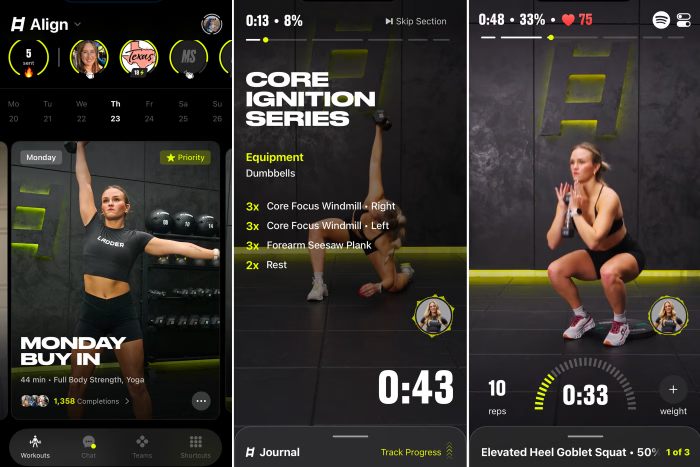
The program operates through a secure application that provides:
• Customized workout plans
• Instructional videos for every exercise
• Trauma-informed movement programming
• Personalized meal guidance
• Participation and engagement tracking
Workouts are designed to:
• Be safe
• Be accessible
• Support regulation, not punishment
Fitness becomes a clinical ally, not a competing service.
FAQ on Sitting still in addiction recovery
Why is sitting still in addiction recovery considered harmful?
Sitting still in addiction recovery keeps the nervous system locked in a dysregulated state. Prolonged inactivity increases stress hormones, reduces emotional regulation, and makes it harder for clients to engage in therapy. Recovery is a physiological process as much as a psychological one — and the body must be regulated before insight can be absorbed.
Isn’t sitting still necessary for therapy and group sessions?
Sitting itself isn’t the issue — unregulated sitting is. When clients are expected to sit for hours without movement breaks, their nervous systems become overwhelmed. Strategic movement before or between sessions allows clients to sit by choice, not force, and significantly improves focus, participation, and emotional stability.
How does sitting still in addiction recovery increase anxiety and cravings?
Sitting still in addiction recovery reduces dopamine, serotonin, and endorphin activity — the same neurochemicals disrupted by substance use. Without movement, anxiety rises, mood drops, and cravings intensify. Movement acts as a natural regulator that helps stabilize these systems.
Why do trauma-impacted clients struggle more with sitting still?
Trauma is stored in the body. For trauma-impacted individuals, stillness can feel unsafe and triggering. Sitting still in addiction recovery can increase hypervigilance, dissociation, and emotional flooding. Trauma-informed movement provides safety, predictability, and a sense of agency that sitting alone cannot.
Does movement replace clinical therapy in addiction treatment?
No — movement supports therapy, it doesn’t replace it. Regulation must come before cognition. When movement is integrated into treatment, clients become more emotionally regulated, making therapy more effective and engagement more consistent.
What type of movement is appropriate in addiction recovery?
Recovery-based movement is not intense or punitive. Effective options include bodyweight exercises, resistance bands, light weights, breathing practices, and low-impact circuits. The goal is nervous system regulation — not exhaustion.
Can movement really improve treatment engagement and retention?
Yes. Programs that reduce prolonged sitting and incorporate structured movement report improved group participation, fewer behavioral incidents, better emotional regulation, and stronger retention. When the body feels safe, the mind can engage.
How does sitting still in addiction recovery impact long-term sobriety?
Long-term sobriety depends on regulation, impulse control, and emotional resilience. Sitting still in addiction recovery undermines these skills by reinforcing dysregulation. Movement helps build stress tolerance, self-awareness, and healthier coping mechanisms that extend well beyond treatment.
Elevate Your Outcomes with a 3-Week Wellness & Fitness Pilot
Treatment Center CEOs, Clinical Directors, and Program Leaders are facing higher demands than ever — from insurance, from families, and from outcome-driven care. This pilot gives you a measurable, trauma-informed wellness solution built specifically for addiction recovery.
- Trauma-informed fitness coaching designed for recovery
- Attendance, engagement, and mood tracking
- Behavior insights aligned with your clinical staff
- Structured sessions that regulate clients and support staff
- Leadership-ready progress reports and outcome metrics
- Clear data on retention, morale, and client stabilization
No long-term commitment — just clear, measurable results.